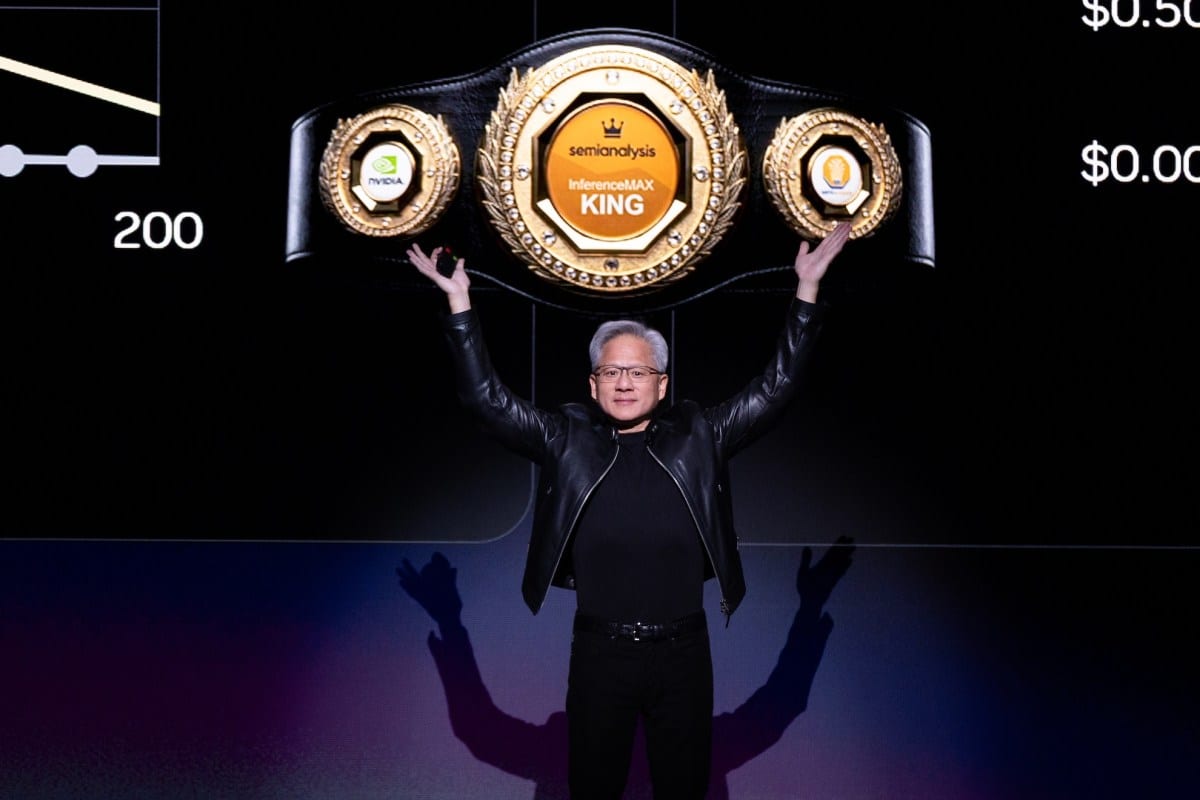
The week in short: Nvidia's GTC set the tone on infrastructure, OpenAI shipped smaller models and bought a developer-tools company, and xAI entered text-to-speech.
Infrastructure
- Nvidia GTC (16 Mar): in his keynote Jensen Huang said, "I see through 2027, at least $1 trillion" in orders for Blackwell and Rubin chips, against about $500 billion through 2026 that Nvidia saw a year earlier. This is a management projection, not booked revenue.
Models and products
- GPT-5.4 mini and nano (17 Mar): OpenAI's small, fast models. Mini is available to Free and Go users in ChatGPT via the Thinking option; nano is API-only. Reported API prices differ between outlets, so we omit them.
- Mistral Forge (17 Mar): Mistral introduced a way for enterprises to train models on their own data, announced at GTC.
Deals
- OpenAI and AWS (17 Mar): a partnership to sell OpenAI's AI to the US federal government.
- OpenAI to acquire Astral (19 Mar): the maker of the Python tools uv, Ruff and ty will join the Codex team after closing. Terms were not disclosed and the deal needs regulatory approval.
Policy
- US AI framework (20 Mar): the Trump administration's AI framework proposes a centralised approach that targets state AI laws and shifts some child-safety responsibility to parents (TechCrunch's summary; we have not read the framework itself).
Voice
- Grok TTS API (16 Mar): xAI's release notes list its text-to-speech API as generally available, with five voices and expressive tags such as [laugh] and [pause]. One aggregator dates it 19 Mar; we use xAI's own date.
Why it matters
Hardware demand and enterprise distribution (cloud marketplaces, own-data training) are where the money is moving, and voice is now a standard API surface at every major lab.